
Product Description
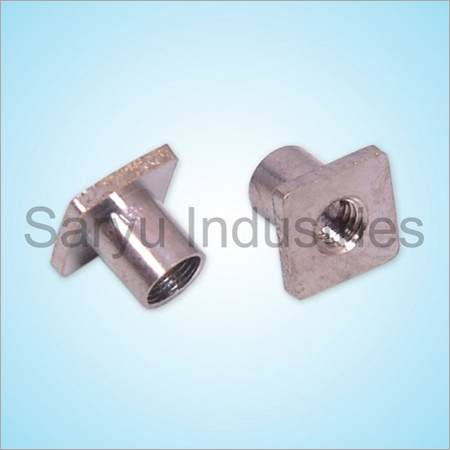
Brass Electronic Insert
We are offering here the Brass Electronic Insert that is nonmagnetic, mildly corrosion resistant, and electrically conductive. The inserts are an excellent choice for projects involving softer materials like soft wood, hard wood, thermoset plastics and thermoplastics. Brass is the cheapest option and has good properties for most applications. The thermal characteristic of brass enables the Inserts to heat up and cool down quickly during the installation. Brass is an alloy of copper and zinc, in proportions which can be varied to achieve varying mechanical, electrical, and chemical properties. The offered Brass Electronic Insert is very useful and easy to install.
Specification
- Material Used: Brass
- Material Composition: As per customer requirement
- Size: As per customer requirement
- Plating: brass, Nickle, crome etc.....
Superior Durability and PrecisionThese brass electronic inserts are crafted from high-quality brass, offering remarkable dimensional stability (0.02 mm tolerance) and robustness under thermal stress. Their high temperature resistance and corrosion protection ensure dependable performance in challenging environments, safeguarding electronic circuits and assemblies.
Flexible Installation MethodsEngineered for convenience, the inserts support press-fit, ultrasonic, and mold-in installation techniques. Whether for PCB mounting or terminal connections, the adaptable head shapes and finish options complement various design and assembly preferences in electronics manufacturing.
Customized SolutionsEvery insert is tailored to the customers requirements, including thread type, size, finish, and surface treatment. CNC machining, milling, and turning guarantee accuracy, while packaging options (polybag, box, carton) ensure safe delivery for projects of any scale.
FAQs of Brass Electronic Insert:
Q: How are brass electronic inserts typically installed in electronic components?
A: Brass electronic inserts can be installed using press-fit, ultrasonic, or mold-in methods. The installation technique depends on the application and material of the host component, ensuring secure integration in connectors, PCBs, and terminals.
Q: What are the main benefits of using brass electronic inserts in electrical and electronics components?
A: These inserts offer high corrosion resistance, precision with 0.02 mm tolerance, temperature resistance up to 350C, and robust mechanical strength. They enhance reliability in connections and maintain performance in demanding environments.
Q: When should I consider using a customized thread or size for my insert?
A: Customized threads or dimensions are recommended when standard Metric or Imperial options do not meet your assembly or design needs. Tailoring the insert ensures optimal fit, compatibility, and performance for unique project requirements.
Q: Where are these brass electronic inserts commonly applied?
A: They find usage in connectors, PCB mounts, terminal blocks, and various industrial fittings within the electrical and electronics sector. Their versatility makes them suitable for machinery, control panels, and custom assemblies.
Q: What process is used to manufacture these brass inserts?
A: The inserts are produced using advanced machining techniques such as CNC turning, milling, and surface treatments like polishing and nickel plating. This ensures dimensional accuracy, excellent surface quality, and compliance with industry standards.
Q: How does the surface finish affect the performance of the brass insert?
A: Surface finishes like tin plating, nickel plating, or natural brass enhance the inserts resistance to corrosion, improve electrical conductivity, and can be chosen to match assembly aesthetics or technical requirements.